GerritHub has been steadily growing, with more teams choosing Gerrit-based workflows. With a larger and more diverse set of projects using the platform every day, it becomes increasingly important to keep the service ad-free, open and fair for everyone.
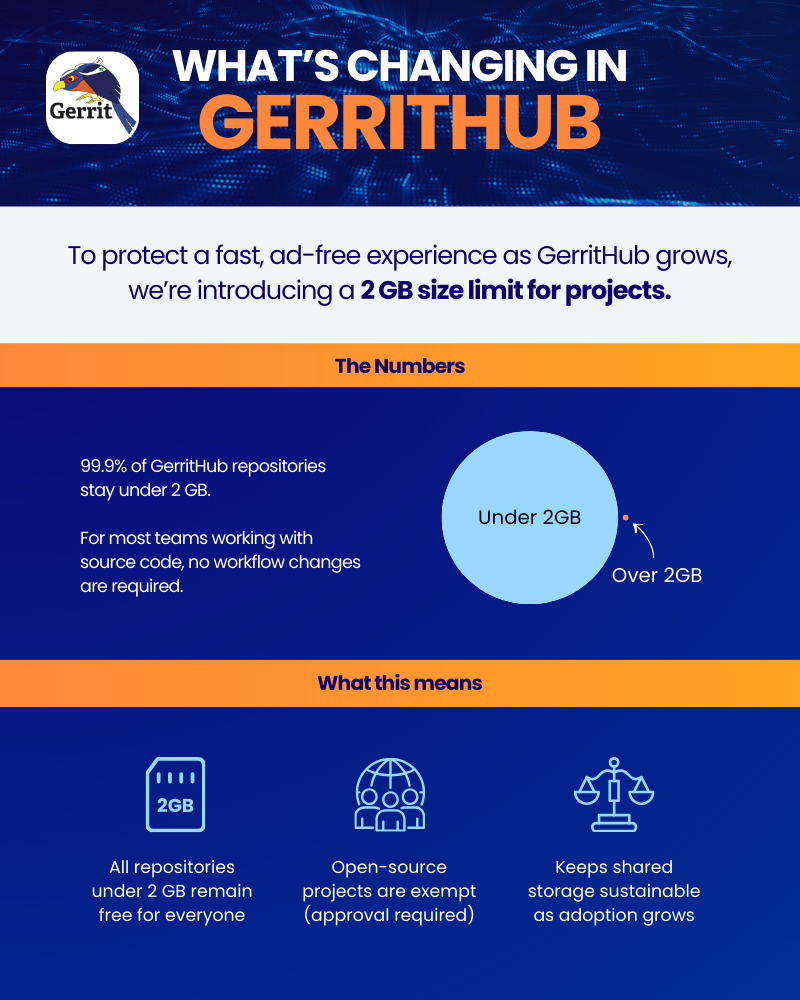
Our analysis shows that less than 0.1% of all the repositories hosted on GerritHub exceeds the 2 GB mark, therefore to ensure we can continue providing high-quality, free hosting for the vast majority of our community, we are introducing a disk size limit for projects on GerritHub. This allows us to guarantee that all repositories under 2 GB remain free for everyone as we scale up the storage capabilities.
Please note that the 2GB limit will not apply to open-source projects, however, they’ll be required to reach out to us for explicit approval.
What does this mean in practice? Repositories imported from GitHub that exceed the 2 GB limit will fail the import into GerritHub, and new pushes that would grow an existing project beyond that threshold will be rejected with a clear, helpful error message explaining why, as follows:
➜ test git:(580cdcf) git push origin HEAD:refs/for/master
...
fatal: Unpack error, check server log
error: remote unpack failed: error Exceeded quota request for project repo/test. Maximum 2GB allowed. If you need a higher limit, reach out to us at GerritForge.com/contact to discuss your needs.
To https://review.gerrithub.io/repo/test
! [remote rejected] HEAD -> refs/for/master (n/a (unpacker error))
error: failed to push some refs to 'https://review.gerrithub.io/repo/test'
This helps keep storage usage under control and ensures that everyone gets a fair use of the common GerritHub.io platform. For most users, especially those working primarily with source code, this limit is generous and should not require any changes to everyday workflows.
This update reflects the healthy and continuous adoption of GerritHub by the community. As usage increases, small operational improvements like this one help us maintain a stable and welcoming environment for all users. We are thankful to everyone who relies on GerritHub for code review and collaboration, and we remain committed to improving the service as it grows. If you require a higher limit than this, please feel free to reach out to us at GerritForge.com/contact to discuss your needs and how we can help you further.
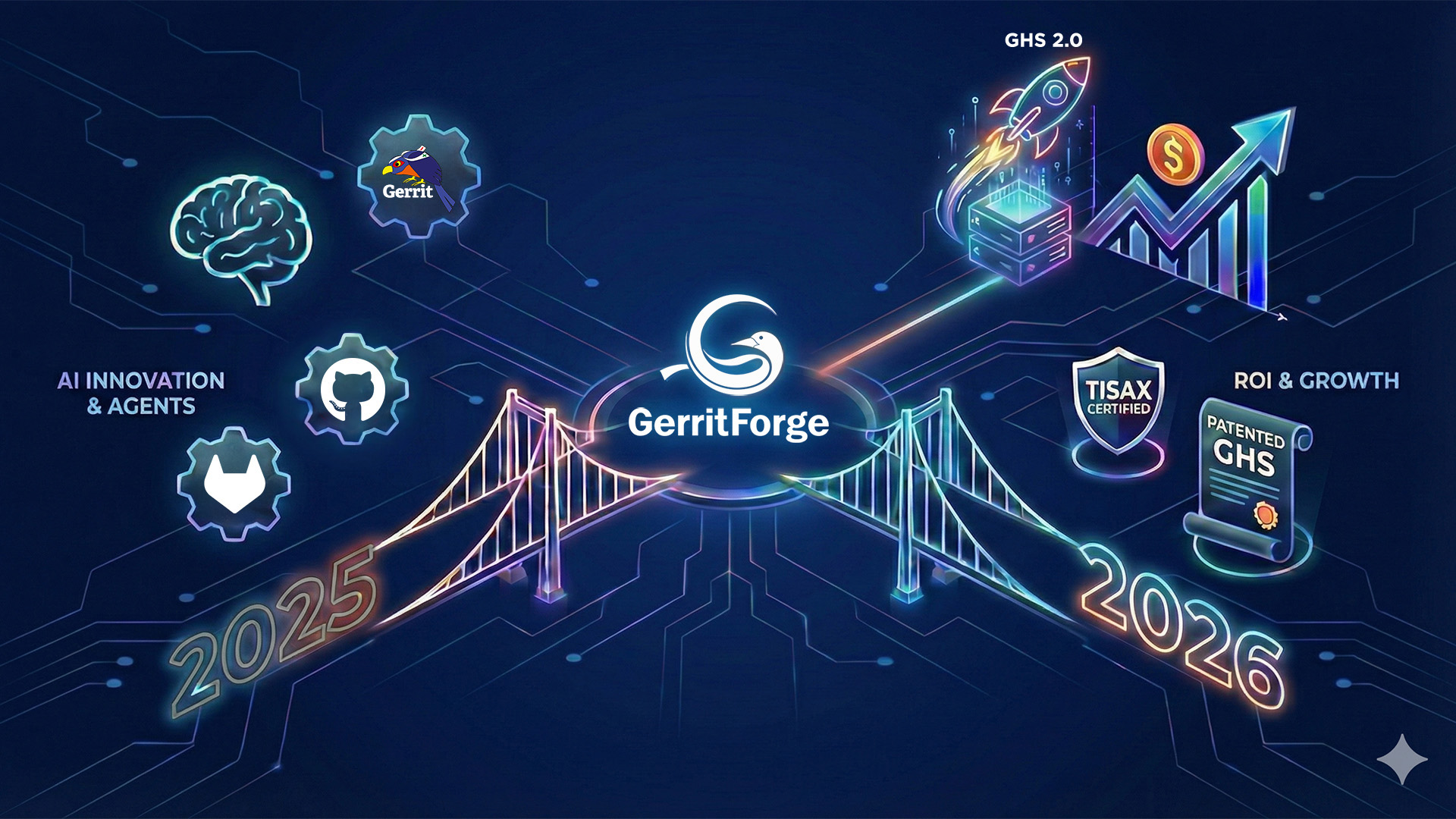
In 2025, GerritForge solidified its leadership in the Git ecosystem by securing TISAX certification and patenting our Git At High Speed (GHS) technology, proving our commitment to enterprise-grade security and performance. However, the rapid industry shift toward “Agentic Software Development” has created a critical challenge: current infrastructures are struggling to convert high-volume AI code generation into measurable business value, often leading to repository slowdowns and inflated costs rather than faster releases.
Our 2026 roadmap directly addresses this “ROI Gap” through a new “Assess, Measure, Improve” framework. We are launching GHS 2.0 to scale Git specifically for AI traffic, introducing server-side autonomous agents via the Gerrit Model Context Protocol (MCP), and deploying cross-platform metrics to monitor Git repository health in real-time. This strategy ensures your SDLC infrastructure not only withstands the load of AI agents but also integrates them securely to deliver the efficiency your investments demand.
2025 in Numbers
Our commitment to the open-source community and our customers is best reflected in the sheer volume of work our team has accomplished over the past 12 months.
Changes contributions to the Gerrit ecosystem
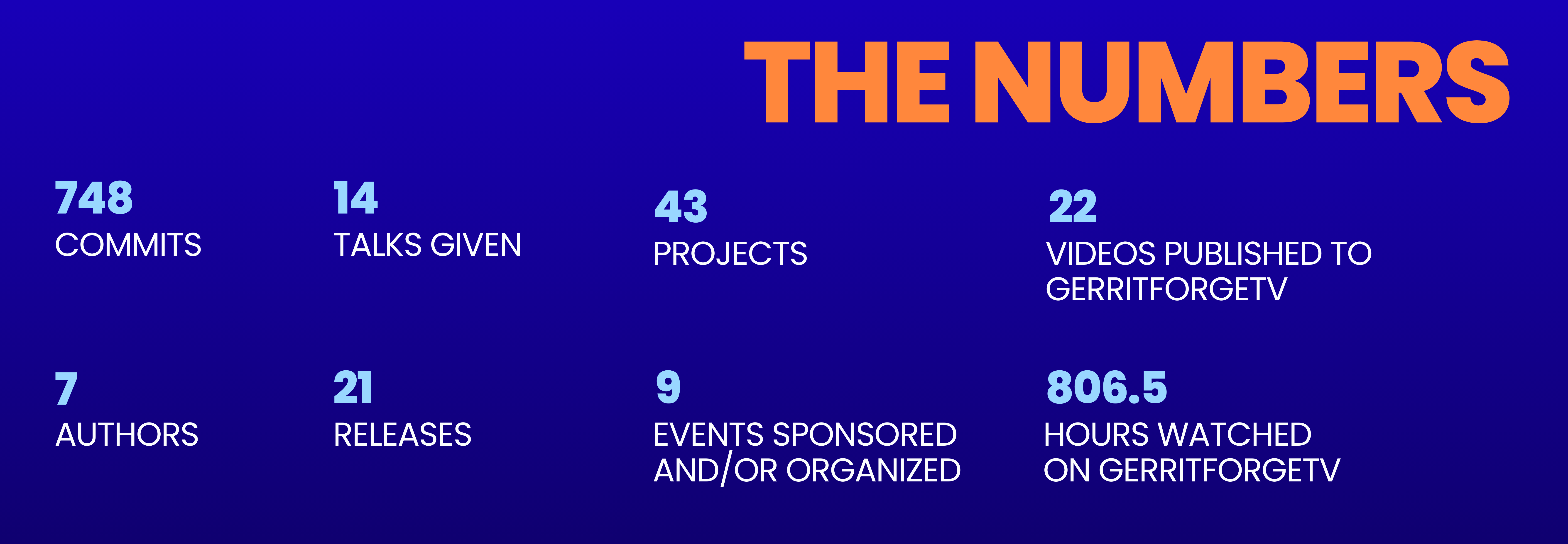
748 commits across 43 projects, driving the Gerrit project forward.
7 authors contributing consistently to core and plugin development.
21 releases delivered, ensuring stability and new features for our users.
14 talks given at international conferences, sharing our expertise with the global dev community.
9 GerritMeets & Conferences sponsored or organized, fostering a vibrant local and global community.
GerritForgeTV: the live stream of the gerrit community
Our YouTube channel keeps being a central knowledge and stage for showcasing the most recent innovations for Gerrit administrators and developers. This year was no exception; we kept updating it with new and engaging content and keeping it relevant to the latest trends in the Git and VCS world.
22 new videos published, staging key international speakers from some of the largest companies in the world, including Google, NVIDIA, Qualcomm and GitLab.
126,483 impressions in the last 12 months.
807 total watch hours, proving that the demand and interest for high-quality Git and Gerrit technical information and innovation is stronger than ever.
Major Successes & Milestones
GHS: From Vision to Patented Standard
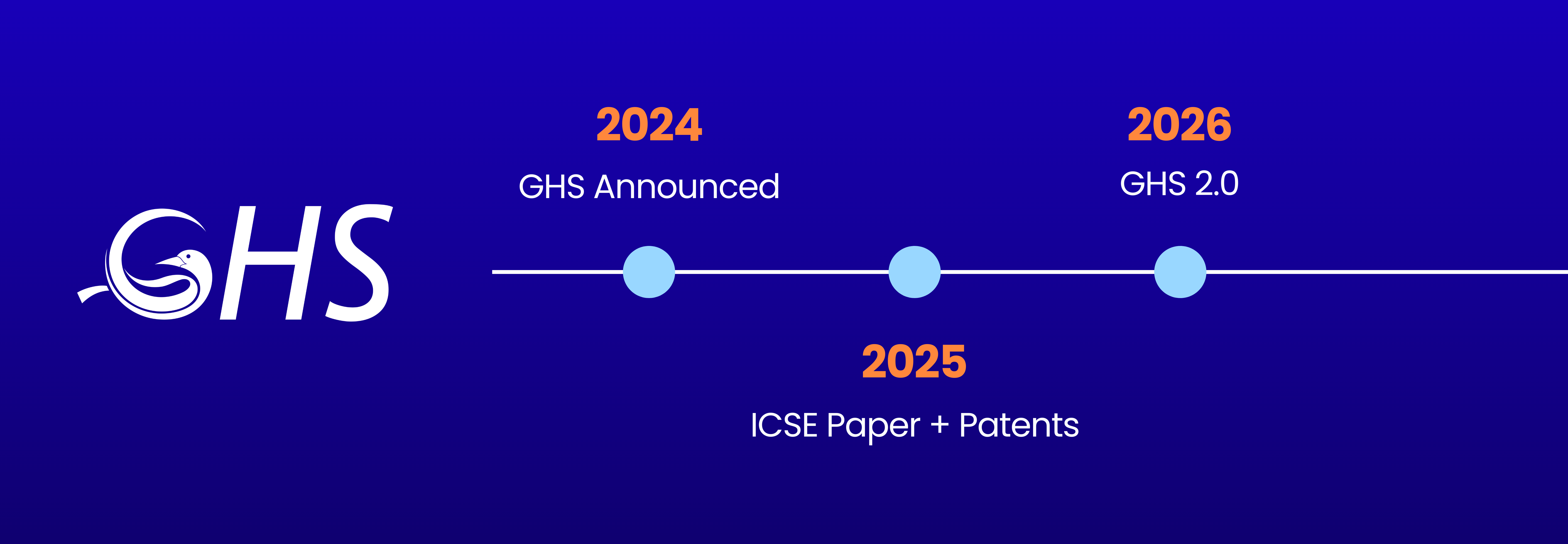
In 2024, we announced Git At High Speed (GHS); one year later, we delivered on the initial promise of groundbreaking Git performance speedups and brought Git performance to the next level. We are proud to announce that GHS has now been officially submitted for US and EU patents. Furthermore, our commitment to scientific rigor led us to present the GHS Paper at ICSE 2025, where it was recognized by the global Computer Science Academic Community as a significant advancement in improving Git SCM performance.
Gerrit community Growth and stewarship
The GerritForge team remains central to the Gerrit project. This year, our team member Ponch was elected as a Maintainer, bringing the total to five GerritForge’s Gerrit Maintainers, on top of that Luca was re-elected to the engineering steering committee, and Dani to the community managers. GerritForge’s deep involvement with the Gerrit Community ensures that our customers’ needs are always represented at the core of the project’s development.
Security and Compliance: TISAX Certification
In 2025, we reached a significant milestone in enterprise trust by achieving TISAX certification, which is key for every software supplier to the modern Software-Defined Vehicles industry. For all industries, security and compliance are non-negotiable. Achieving TISAX certification represents our commitment to the highest levels of these standards.
Product Evolution: Gerrit BSL
For 17 years, GerritForge has operated on a 100% open source model. However, the landscape of software development is changing. Cyber threats and supply chain security compliance require a level of certification and long-term maintenance that the pure open-source model struggles to address on its own.
We introduced Gerrit Enterprise, a subscription carefully designed to shake up the Gerrit ecosystem:
The “Open-Core” Vision: We have separated the “Gerrit Core”—which remains 100% open source under Apache 2.0—from our high-performance enterprise plugins, which are released under BSL.
What is BSL? The Business Source License is a “source-available” model. It allows for public viewing and non-production use, but requires a license for commercial use.
Commitment to release as open source: An essential part of our BSL is the fact that after 5 years, any BSL-licensed code from GerritForge automatically converts to Apache 2.0. This ensures that while we fund today’s innovation, the community eventually benefits too.
This move will provide a sustainable path to continue investing in the Gerrit core platform, its ecosystem, and the community events we all rely on to keep the project alive and thriving.
We also had the most successful GerritMeets to date, dedicated to the Code Reviews in the Age of AI, hosted by Google in Munich, reaffirming Gerrit’s vital role in large-scale professional software development and its integration with the latest AI technologies to improve and accelerate the entire SDLC.
Paving the Way with AI
The future of Gerrit Code Review is happening now. In 2025, Gerrit Code Review v3.13 released a suite of new AI features and tools, including the brand-new MCP (Model Context Protocol) server open-sourced by Google. These tools are the foundation for a new way of interacting with code, paving the way for deeper integrations that make software development and code review faster and smarter.
Looking at 2026: the future is now
All the evolutions we saw across major industries in 2025 are reshaping the landscape of Git and the entire SDLC. The introduction of “Agentic Software Development” has created shockwaves across the industry and changed how we interact with and use these tools.
Using AI chats to vibe-code, cooperating and orchestrating AI Coding Agents, and generating and reviewing code automatically put tremendous strain on all the existing machinery that was never really designed to perform and scale at this rate.
All the major companies in the SDLC are looking at developing and leveraging LLMs in their products, adding the AI vibe to their product lines; however, there is a lot of work to do to make this generational transition to AI really work for everyone.
Productivity vs. Output Gap AI tools provide significant productivity gains in code generation, code review, debugging, and testing; these improvements do not always translate into faster release cycles.
Developers’ Productivity vs. Actual Changes Merged Engineers using AI tools are saving time in some of the repetitive coding tasks, such as prototyping and scaffolding. However, the generated code often gets stuck in the validation queue and does not become a valuable company asset until it is properly merged.
The Promise of High ROI from AI According to a recent Deloitte study, very few AI implementations across the entire SDLC deliver significant ROI. Progress is hard to measure, and the majority of organisations with substantial AI spending still fail to achieve tangible benefits. Only 6% of projects see returns in under 12 months, whilst most will take at least 2 years of continuous investment.
Agentic AI Future vs. Reality Agentic AI has been made possible by increased accessibility to the existing knowledge base and SDLC infrastructure by LLMs and promises a full end-to-end automation. However, only a small fraction of companies started using it, and of those, only 10% are currently realizing significant ROI.
GerritForge bridges the gaps between AI innovations and ROI
Our mission in 2026 is to help all organisations achieve the expected ROI from their AI investments by identifying and filling the gaps that hinder the success of their SDLC implementation.
The way forward is to engage with current and new customers and introduce new technologies and innovations into their existing infrastructure.
Assess, measure, improve, repeat.
We do believe that everyone can make progress and, at the same time, do more with the money they have invested in AI. We are truly believers that data is the only truth that can drive progress forward and on which everything should be based.
Our product plans for 2026 are all based on a smarter way to measure and improve:
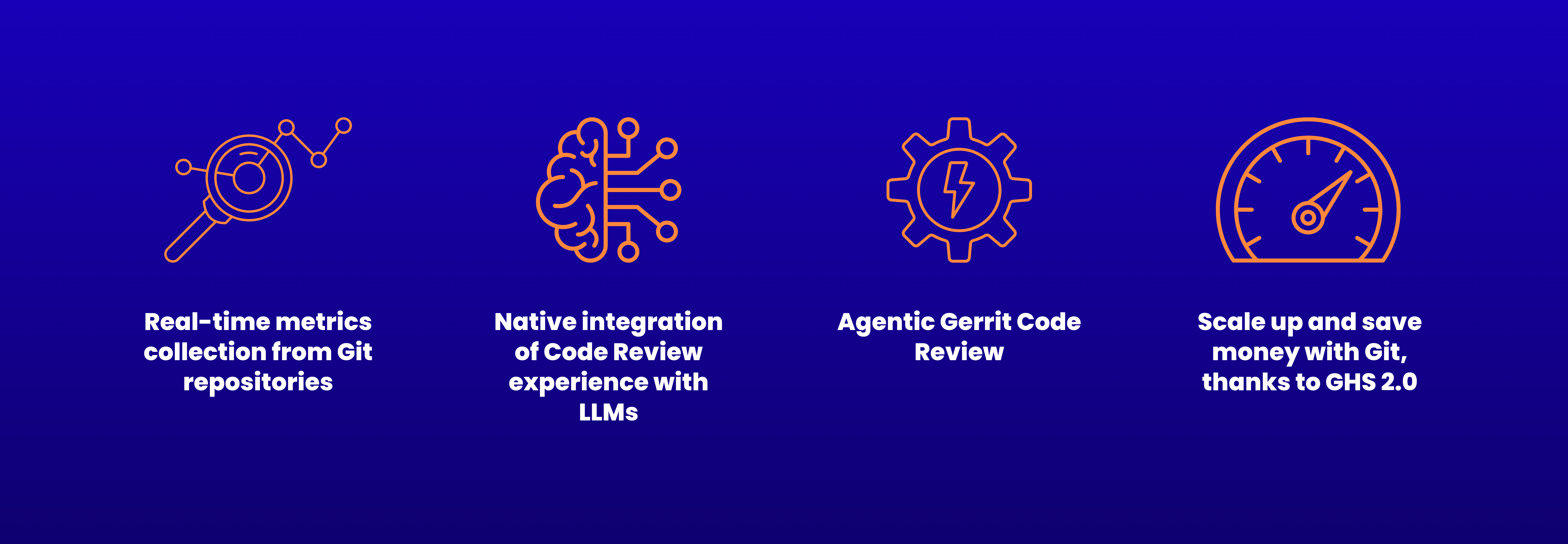
Real-time metrics collection from Git repositories We will introduce a brand-new real-time data collector, based on the 3 years of R&D and investments made on repository performance, published at the ICSE 2025 in Ottawa (CA). The new component will be able to detect and advertise any repository slowdown caused by AI. The component is planned to support GitLab, GitHub Enterprise, Gitea, in addition to Gerrit Code Review, and is extendible to all Git-based SCM systems.
Native integration of Code Review experience with LLMs Gerrit Code Review v3.14, planned to be released in Spring 2026, will introduce the _”AI Chat”_ with any LLMs. GerritForge will take native support to a whole new level, enabling end-to-end communication and integration with Google Gemini, ChatGPT, and many other popular LLMs.
Agentic Gerrit Code Review Gerrit MCP, now Open Source, helps developers improve their client-side integration between Gerrit and LLMs using their own credentials. GerritForge will bring this paradigm to the server-side and enable real-life AI Agents to leverage Gerrit MCP for performing analysis and taking actions autonomously, without sacrificing confidentiality, security, and compliance.
Scale up and save money with Git, thanks to GHS 2.0 GerritForge is bringing its GHS technology to a brand-new level, with all the experience and learnings in understanding the traffic generated by AI Agents. The new 2.0 will bring new modern actions and an improved learning model that will be able to react more accurately and bring system resources and costs into the ROI equation.
The future of Git, Gerrit Code Review, and the entire SDLC is now. AI has accelerated the race for innovation, adding speed to the competition. GerritForge is there with you, helping to endorse it and ensuring the whole pipeline will scale, and you can really achieve the ROI that makes your company stand against the competition.
Thank you to our team, our customers, and the incredible Gerrit community for making 2025 a year to remember. Let’s make 2026 THE ONE to remember as a turning point for the whole project, the Git ecosystem, and the community.
Gerrit Code Review 3.13 has landed, bringing a significant wave of security enhancements, powerful automation, and next-generation AI features designed to streamline your development workflow. This release reflects a healthy, growing open-source project, with a focus on improving both the user experience and the underlying security and configurability of the platform.
Here are the top 6 features and improvements you need to know about in Gerrit 3.13:
Introducing Gerrit Flows for Powerful Automation
Gerrit Flows is a game-changing new concept that introduces automation rules for changes. It is a powerful generalization of the logic previously found in issue tracker plugins (like its-jira), allowing you to define a sequence of actions triggered when specific conditions are met.
This is a pluggable service, meaning that while the core functionality is in Gerrit, community plugins can easily integrate it with systems like Jira, GitHub Issues, or internal tools.
An example could be to add reviewers only after the CI/CD has validated the change, so that the reviewer doesn’t waste time reviewing a change that will ultimately receive a minus one from the build process.
HTTP Auth-Tokens Replace Long-Lived Passwords
In a major security upgrade driven primarily by SAP’s contribution, Gerrit 3.13 deprecates long-lived HTTP passwords in favor of secure, time-limited Authentication Tokens (Auth-Tokens).
This enhancement addresses two long-standing security concerns with previous HTTP passwords:
Expiration: Tokens can now be set to expire, allowing organizations to enforce rotation policies that were previously not enforceable when using Git or the Gerrit REST API over HTTPS.
Multiple Credentials: Users can have more than one token with friendly names, enabling proper credential rotation (like blue/green deployment) for automated scripts without downtime.
Tokens are a full replacement of the legacy HTTP passwords, as the ability to define their maximum lifetime is often a prerequisite for security compliance. Generating a new token credential would automatically remove the deprecated passwords stored in the account’s profile.
Next-Gen AI Assistance: AI prompt generation for Code Review
Gerrit 3.13 firmly steps into the era of AI-assisted development by enabling its foundational AI features by default and introducing native facilities to request help to review incoming changes using an external LLM.
AI-Assisted “Generate Prompt” Feature: This feature was previously released as an experiment and is now enabled by default. It helps users generate rich, explicitly crafted prompts for LLMs (such as Gemini, ChatGPT, or Claude) to assist with code reviews. Users can ask for help with the commit message, request improvements, or check for security concerns.
Dedicated UI for Project Labels and Submit Requirements
Configuration and administration are significantly simplified with the introduction of dedicated UI panels for managing Project Labels and Submit Requirements.
Interactive Project Configuration vs. config file editing: Previously, defining these project settings required cloning and editing the project.config file, either offline or online, a process described as difficult and error-prone for most users.
Submittability Split: This reinforces the modern split where Labels are just votes, and Submit Requirements formally define the logic for a change’s submittability.
End-to-End Group Deletion \o/
This was a long-awaited quality-of-life feature: Gerrit 3.13 provides full end-to-end functionality to delete internal groups directly through the UI and a dedicated REST API.
Administrative Control: In the past, groups, once created, were permanent. Now, administrators can remove them.
Prerequisite: A group cannot be deleted if it is referenced in any ACL (access control list). Admins must first reshape their ACLs before removal. The community has acknowledged that the resulting error message needs improvement to show where the group is referenced.
Significant UI/UX Updates, Including Drag-and-Drop
Gerrit continues its modernization effort, focusing on a cleaner, more efficient user experience, thanks largely to contributions from Paladox/Wikimedia.
Drag-and-Drop Reviewers: Users can now drag and drop reviewers and CCed users to move them between fields, eliminating the annoying multi-step process of removing a user from one list and adding them to the other.
Mobile and Material Updates: The release includes extensive modernization, replacing older components with @material/web, and a redesigned mobile UI for improved navigation.
Gerrit 3.13 By The Numbers
A Community Effort Gerrit 3.13 saw a significant push in core development, reversing the trend of previous releases that focused more heavily on plugins. The number of commits in Core Gerrit went from ~600 in Gerrit 3.12 to over 900 in Gerrit 3.13, showcasing an amazing increase of pace in the development speed of the project, which is great to see.
The open-source health of Gerrit is strong, with no single organization contributing over 50% of the changes. The contributions are spread across many companies, demonstrating the actual value of open source and the good health of the project. Google continues to lead the project from the forefront with almost 40% of commits.
GerritForge’s Contribution
Here at GerritForge, led by maintainer Luca Milanesio, we contributed 28% of the commits to the past 12 months of the Gerrit project contributions! We also, as usual, performed the crucial work required to take the finished code and turn it into a consumable release for the world, including, but not limited to, managing the whole release process and continuing to host the CI/CD pipelines for the project.
This dedicated effort ensures the smooth, professional delivery of every new version of Gerrit.
However, the world it was built for – local repositories and teams, along with simple, human-centric CI/CD pipelines – no longer exists.
Today, codebases are massive. Teams are global. And AI is generating code faster than ever before. Our infrastructure hasn’t kept pace, and traditional Git servers are reaching their limits.
Development Has Outgrown Traditional Git
Software development has exploded in both volume and velocity. According to Archive Market Research, the global software repository market will hit $15 billion in revenue in 2025, growing at 15% annually through 2033. GitHub now hosts over 420 million repositories, supporting more than 100 million developers – each pushing more commits, more frequently, and with more automation than ever.
At the same time, 97% of teams now use AI-assisted tools for vibe-coding, AI-agents for creating PRs and commits, automated AI-code-review, and AI-generated documentation. This results in a massive surge in server traffic, particularly read operations from increased test jobs and automated quality-checking processes, which are literally exploding.
Traditional scaling methods – adding more servers, bigger instances, or wider clusters – simply don’t address the core issue: the world has changed since Git was built 20 years ago.
The Breaking Point for Traditional Git Servers
The symptoms are now familiar to most engineering teams:
Slow performance. Git clones and fetches are taking several minutes or even timing out instead of completing swiftly in a few seconds.
Pipeline delays. CI/CD is waiting for repositories to be available for cloning or fetching, which delays the feedback cycle.
Storage capacity strain. Larger monorepos or multi-repo setups are hitting massive BLOB count and hitting ref limits. When storage is hosted on the Cloud or on shared disks, the increase in the directories and I/O transfer makes Git almost unusable.
Rising costs. Over-provisioned infrastructure is trying (and failing) to keep up. The provisional or elastic filesystem limits increase significantly, bringing operational costs to new heights never seen before, and putting more pressure on the budget.
The Archive Market Research report warns: “The rising complexity of software development necessitates efficient and reliable repositories for managing code, dependencies, and artifacts.”
In other words, the systems we depend on to deliver software are now slowing software down.
Scaling Smarter, Not Harder
At GerritForge, we believe that simply throwing more hardware at the problem is no longer enough: it is Git and its utilisation that need to be smarter. We have been researching on the use of AI for optimising the performance and scalability of repositories for over 3 years and shared our findings with the global scientific community.
That’s why we built GHS, an AI-powered accelerator for Git-based SCMs.
We have simulated and demonstrated how traditional tools would collapse and developed GHS, a brand-new model to overcome the traditional limitations of the Git repositories.
GHS learns how your repositories behave, your access patterns, your CI/CD workflows, and your traffic peaks – and, using reinforcement learning, automatically optimises performance in real-time.
With GHS, the whole development team will experience:
Up to 100× faster Git operations. Clones and fetches keep on completing at raw speed, without slowdowns, timeouts or slack.
Real-time auto-optimisation. The Git repositories are automatically monitored and optimised for speed, without manual operations.
Lower operational costs. The CPU and storage do not suffer from the overload of incoming traffic, delivering better performance on existing hardware. There is no need to scale up the infrastructure and costs massively.
Increased reliability. Git servers remain stable even under extreme load, eliminating the need for emergency restarts or maintenance.
Traditional scaling adds more servers. GHS scales using its sophisticated AI model to get the most out of what you already have.
The Gerrit User Summit 2025 made one thing clear: the era of traditional scaling is coming to an end.
As repositories grow and workflows evolve, the next generation of developer infrastructure must be intelligent, simplified & resilient. AI isn’t replacing developers – it’s augmenting them. But if your Git infrastructure can’t keep pace with this new level of activity, your entire SDLC pipeline will suffer.
2025 marks a turning point for software delivery. Traditional Git servers can’t keep up, but that doesn’t mean your team can’t. Because in modern DevOps, speed isn’t just efficiency, it’s a competitive edge.
Slow Git isn’t just annoying – it’s expensive for everyone: developers wait for a CI/CD validation of their changes, SCM admins are wasting their time in fire-fighting SCM slowdown and broken pipelines, IT managers are wasting millions of dollars in CPU and Disk hosting costs.What if your Git operations could be up to 100x faster, and keep up with the new AI-vibe coding landslide of PR and changes?
100x Faster Git, Powered by AI
GHS is an AI-based accelerator for Git SCM that redefines performance:
Up to 100x faster clones and fetches.
CI/CD pipelines that run without SCM barriers.
Adapt automatically to your repository shape and make it faster.
Scale without slowdown even under heavy loads
This isn’t traditional “tuning.” GHS learns your repos and access patterns, then continuously optimises them so your Git server is always running at maximum speed.
How Does GHS Deliver 100x Faster Git?
Measure Everything It collects detailed metrics in realtime on your repositories.
Spot Bottlenecks GHS AI model is trained on recognizing the bottlenecks and take immediate action, before they become a problem
Stay Fast Your Git stays consistently accelerated, not just temporarily boosted.
Why Speed Matters
Developers stop wasting hours on slow fetches and builds.
Release managers push features out faster.
IT leaders reduce infra costs by doing more with less.
Admins no longer fire-fight performance issues.
Every 1% of time saved in Git can add up to days of productivity across a large team. Imagine saving 100x that.
Who Needs 100x Faster Git?
Repositories of all sizes: AI-driven code generation and “vibe-coding” have dramatically accelerated the pace of software delivery.
Enterprises that have adopted the AI-pipeline want that value delivered faster to production.
Any team frustrated with slow CI/CD pipelines.
The GHS Advantage
Transformative speed: not just 2x or 5x faster, but up to 100x
SCM expertise: GerritForge’s decades of enterprise SCM know-how built in.
Proven reliability: Stability and uptime as performance scales.
Get Started Today
You can try GHS free for 30 days and experience the difference for yourself.
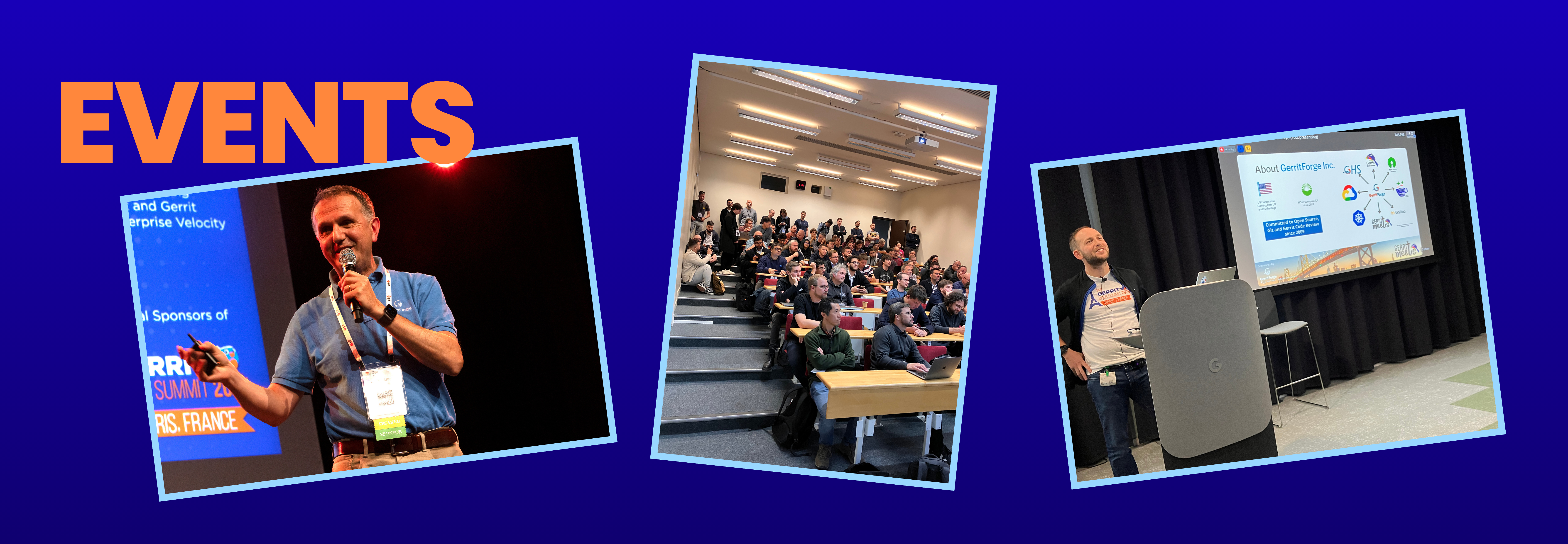
First, a huge thank you to the OpenInfra Foundation for hosting this event in Paris. Their invitation to have the Gerrit User Summit join the rest of the community set the stage for a truly collaborative and impactful gathering.
Paris last weekend wasn’t just a conference; it was a reunion. Fourteen years after the last GitTogether at Google’s Mountain View HQ, the “Git and Gerrit, together again” spirit was electric.
On October 18-19, luminaries from the early days (Scott, Martin, Luca, and many others) reconvened, sharing the floor with the new generation of innovators. The atmosphere was intense, filled with the same collaborative energy of 2011, but focused on a new set of challenges. The core question: how to evolve Git and Gerrit for the next decade of software development, a future dominated by AI, massive scale, and an urgent demand for smarter workflows.
Here are the key dispatches from the summit floor.
A Historic Reunion, A Shared Future
This event was a powerful reminder that the open-source spirit of cross-pollination is alive and well. The discussions were invigorated by the “fresh air” from new-school tools like GitButler and Jujutsu (JJ), which are fundamentally rethinking the developer experience.
In a significant show of industry-wide collaboration, we were delighted to have GitLab actively participating. Patrick’s technical presentation on the status of reftable was a highlight, but his engagement in discussions on collaborative solutions moving forward with the Gerrit community truly set the tone. It’s clear that the challenges ahead are shared by all platforms, and the solutions will be too.
Scaling Git in the Age of AI
The central theme was scale. In this rapidly accelerating AI era, software repositories are growing at an unprecedented rate across all platforms—Gerrit, GitHub, and GitLab alike. This isn’t a linear increase; it’s an explosion, and it’s pushing SCM systems to their breaking point.
The consensus was clear: traditional vertical and horizontal scaling is no longer enough. The community is now in a race to explore new techniques—from the metal up—to improve performance, slash memory usage, and make core Git operations efficient at a scale we’ve never seen before. This summit was a rare chance for maintainers from different ecosystems to align on these shared problems and forge collaborative paths to solutions.
Dispatches from the Front Lines: NVIDIA and Qualcomm
This challenge isn’t theoretical. We heard powerful testimonials from industry giants NVIDIA and Qualcomm, who are on the front lines of the AI revolution.
They shared fascinating and sobering insights into the repository explosion they are actively managing. Their AI workflows—encompassing massive datasets, huge model binaries, and unprecedented CI/CD activity—are generating data on a scale that is stressing even the most robust SCM systems. Their presentations detailed the unique challenges and innovative approaches they are pioneering to tackle this data gravity, providing invaluable real-world context that fueled the summit’s technical deep dives.
Beyond the Pull Request: The Quest for a ‘Commit-First’ World
One of the most passionate debates centered on the developer workflow itself. The wider Git community increasingly recognizes that the traditional, monolithic “pull request” model is ill-suited to the “change-focused” code review that platforms like Gerrit have championed for years.
The benefits of a change-based workflow, cleaner history, better hygiene, and higher-quality atomic changes—are driving a growing interest in standardizing a persistent Change-ID for each commit. This would make structured, atomic reviews a first-class citizen in Git itself. The collaboration at the summit between the Gerrit community, GitButler, JJ, and other Git contributors on defining this standard was a major breakthrough.
This shift is being powered by tools like GitButler and JJ, which are built on a core philosophy: Workflow Over Plumbing. Modifying commits, rebasing, and resolving conflicts remain intimidating hurdles for many developers. The Git command line can be complex and unintuitive. These new tools abstract that complexity away, guiding users through commit management in a way that feels natural. The result is faster iteration, higher confidence, and a far better developer experience.
AI and the Evolving Craft of Code Review
Finally, no technical summit in 2025 would be complete without a deep dive into AI. The arrival of AI-assisted coding is fundamentally shifting the dynamic between author and reviewer.
Engineers at the summit expressed a cautious optimism. On one hand, AI is a powerful tool to accelerate reviews, improve consistency, and bolster safety. On the other, everyone is aware of the trade-offs. Carelessly used, AI-generated code can weaken knowledge sharing, blur IP boundaries, and erode a team’s deep, institutional understanding of its own codebase.
The challenge going forward is not to replace the human in the loop, but to strengthen the craft of collaborative review by integrating AI as a true co-pilot.
A Path to 100x Scale: The GHS Initiative
The most forward-looking discussions at the summit centered on how to achieve the massive scale required. One of the most promising solutions presented was GHS (Git-at-High-Speed). This innovative approach is not just an incremental improvement; it’s a strategic initiative designed to increase SCM throughput by as much as 100x.
The project’s vision is to enable platforms like Gerrit, GitLab, and GitHub Enterprise to handle the explosive repository growth and build traffic generated by modern AI workflows. By re-architecting key components for hyper-scalability, GHS represents a concrete path forward, ensuring that the industry’s most critical SCMs can meet the unprecedented demands of the AI-driven future.
The Road from Paris
The Gerrit User Summit 2025 was more than a look back at the “glorious days.” It was a statement. The Git and Gerrit communities are unified, energized, and actively building the next generation of SCM. The spirit of GItTogether 2011 is back, but this time it’s armed with 14 years of experience and a clear-eyed view of the challenges and opportunities ahead.




 GerritForge Blog