How Git and Gerrit are Re-Tooling for the Age of AI

A Special Report from the Gerrit User Summit 2025

First, a huge thank you to the OpenInfra Foundation for hosting this event in Paris. Their invitation to have the Gerrit User Summit join the rest of the community set the stage for a truly collaborative and impactful gathering.

Paris last weekend wasn’t just a conference; it was a reunion. Fourteen years after the last GitTogether at Google’s Mountain View HQ, the “Git and Gerrit, together again” spirit was electric.

On October 18-19, luminaries from the early days (Scott, Martin, Luca, and many others) reconvened, sharing the floor with the new generation of innovators. The atmosphere was intense, filled with the same collaborative energy of 2011, but focused on a new set of challenges. The core question: how to evolve Git and Gerrit for the next decade of software development, a future dominated by AI, massive scale, and an urgent demand for smarter workflows.

Here are the key dispatches from the summit floor.

A Historic Reunion, A Shared Future

This event was a powerful reminder that the open-source spirit of cross-pollination is alive and well. The discussions were invigorated by the “fresh air” from new-school tools like GitButler and Jujutsu (JJ), which are fundamentally rethinking the developer experience.

In a significant show of industry-wide collaboration, we were delighted to have GitLab actively participating. Patrick’s technical presentation on the status of reftable was a highlight, but his engagement in discussions on collaborative solutions moving forward with the Gerrit community truly set the tone. It’s clear that the challenges ahead are shared by all platforms, and the solutions will be too.

Scaling Git in the Age of AI

The central theme was scale. In this rapidly accelerating AI era, software repositories are growing at an unprecedented rate across all platforms—Gerrit, GitHub, and GitLab alike. This isn’t a linear increase; it’s an explosion, and it’s pushing SCM systems to their breaking point.

The consensus was clear: traditional vertical and horizontal scaling is no longer enough. The community is now in a race to explore new techniques—from the metal up—to improve performance, slash memory usage, and make core Git operations efficient at a scale we’ve never seen before. This summit was a rare chance for maintainers from different ecosystems to align on these shared problems and forge collaborative paths to solutions.

Dispatches from the Front Lines: NVIDIA and Qualcomm

This challenge isn’t theoretical. We heard powerful testimonials from industry giants NVIDIA and Qualcomm, who are on the front lines of the AI revolution.

They shared fascinating and sobering insights into the repository explosion they are actively managing. Their AI workflows—encompassing massive datasets, huge model binaries, and unprecedented CI/CD activity—are generating data on a scale that is stressing even the most robust SCM systems. Their presentations detailed the unique challenges and innovative approaches they are pioneering to tackle this data gravity, providing invaluable real-world context that fueled the summit’s technical deep dives.

Beyond the Pull Request: The Quest for a ‘Commit-First’ World

One of the most passionate debates centered on the developer workflow itself. The wider Git community increasingly recognizes that the traditional, monolithic “pull request” model is ill-suited to the “change-focused” code review that platforms like Gerrit have championed for years.

The benefits of a change-based workflow, cleaner history, better hygiene, and higher-quality atomic changes—are driving a growing interest in standardizing a persistent Change-ID for each commit. This would make structured, atomic reviews a first-class citizen in Git itself. The collaboration at the summit between the Gerrit community, GitButler, JJ, and other Git contributors on defining this standard was a major breakthrough.

This shift is being powered by tools like GitButler and JJ, which are built on a core philosophy: Workflow Over Plumbing. Modifying commits, rebasing, and resolving conflicts remain intimidating hurdles for many developers. The Git command line can be complex and unintuitive. These new tools abstract that complexity away, guiding users through commit management in a way that feels natural. The result is faster iteration, higher confidence, and a far better developer experience.

AI and the Evolving Craft of Code Review

Finally, no technical summit in 2025 would be complete without a deep dive into AI. The arrival of AI-assisted coding is fundamentally shifting the dynamic between author and reviewer.

Engineers at the summit expressed a cautious optimism. On one hand, AI is a powerful tool to accelerate reviews, improve consistency, and bolster safety. On the other, everyone is aware of the trade-offs. Carelessly used, AI-generated code can weaken knowledge sharing, blur IP boundaries, and erode a team’s deep, institutional understanding of its own codebase.

The challenge going forward is not to replace the human in the loop, but to strengthen the craft of collaborative review by integrating AI as a true co-pilot.

A Path to 100x Scale: The GHS Initiative

The most forward-looking discussions at the summit centered on how to achieve the massive scale required. One of the most promising solutions presented was GHS (Git-at-High-Speed). This innovative approach is not just an incremental improvement; it’s a strategic initiative designed to increase SCM throughput by as much as 100x.

The project’s vision is to enable platforms like Gerrit, GitLab, and GitHub Enterprise to handle the explosive repository growth and build traffic generated by modern AI workflows. By re-architecting key components for hyper-scalability, GHS represents a concrete path forward, ensuring that the industry’s most critical SCMs can meet the unprecedented demands of the AI-driven future.

The Road from Paris

The Gerrit User Summit 2025 was more than a look back at the “glorious days.” It was a statement. The Git and Gerrit communities are unified, energized, and actively building the next generation of SCM. The spirit of GItTogether 2011 is back, but this time it’s armed with 14 years of experience and a clear-eyed view of the challenges and opportunities ahead.


Antonio Barone – Gerrit Maintainer, Release Manager
Luca Milanesio – Gerrit Maintainer, Release Manager, Gerrit Engineering Steering Committee
Jacek Centkowski – Gerrit Maintainer

Gerrit User Summit 2023 – Recap and Survey Results

The Gerrit User Summit 2023 took place in-person simultaneously in Sunnyvale, California on September 30th and in Gothenburg, Sweden until October 1st 2023. To accommodate the global community, it was live streamed on GerritForge TV so that individuals in various locations could participate, share their experiences, and contribute their ideas.

If you were unable to attend the Summit, you can find all the presentations and content online . Additionally, recordings of the presentations and Q&A sessions can be accessed on GerritForge’s TV channel on YouTube.

Stats and attendee feedback around the 2023 Summit

Snapshot

  • 2 days
  • 2 locations
  • 84 registrations
  • over 70% attendance
  • 34 companies
  • 16 sessions
  • 18 presenters from 8 organisations

Despite the challenges posed by the time difference, the community still got involved showing its commitment.

What is the opinion about the Summit?

A survey was sent to all of the attendees on both locations and even though there was a 30% response rate in USA and 17% in Sweden we delved into the details, and these are the comments received:

Q1: How would you rate the Gerrit User Summit 2023 edition?

GUS 2023 - Rate - Sweden

GUS 2023 - Rate - USA

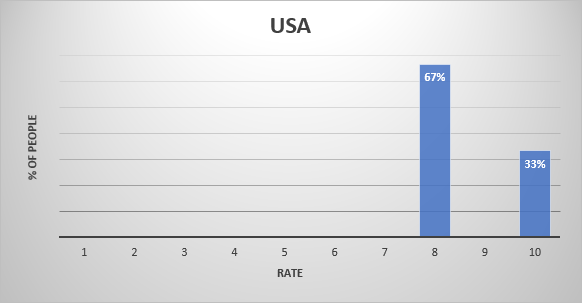
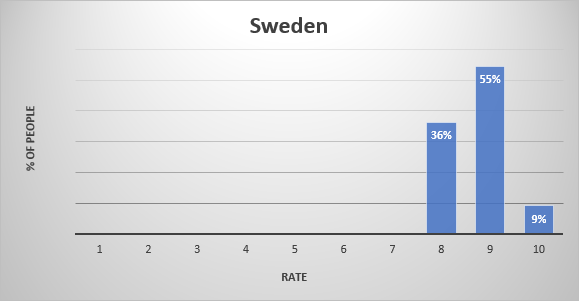
While in USA, 9% of the respondents rated their experience at a 10, 55% rated it at a 9 and 36% gave an 8; in Sweden the great majority rated it with an 8. Where 10 was the highest positive rate, this feedback gives an idea of how satisfied attendees were in general with the User Summit. Understanding individual experiences and perceptions allows us to evaluate the event and identify areas for improvement.

Q2: What did you like the most about the 2023 Summit?

Attendees in California were thoroughly impressed with the technical excellence of the talks at the event and appreciated the valuable networking opportunities. On the other hand, Gothenburg attendees raved about the fantastic space and location of the venue. They found the off-camera discussions, presentations, and Q&A sessions incredibly interesting and enjoyable. Thought the use of Slido for Q&A was highly effective, giving attendees ample time to contemplate and engage with the speakers.

They also loved hearing organisations share their stories and the collaborative atmosphere for creating new design documents and proof-of-concept code. The attendees were left with the impression that the event brought together a multitude of talented individuals who delivered engaging talks. The event left high expectations for upcoming features and created an enthusiastic, positive atmosphere.They truly valued the chance to engage with fellow attendees and found the experience rewarding.

Q3: What did you not like about the 2023 Summit?

Attendees from both locations expressed their concern about the division of the summit into two locations and time zones, which made it challenging to connect with the entire group. While the idea of having simultaneous locations was appreciated, attendees in Gothenburg felt disadvantaged as they were unable to ask live questions to presenters due to the time difference with the USA. It was recommended not to repeat this approach in future events. However, overall, the attendees had a positive experience at the summit. They expressed their wish for Google to attend in the future and highlighted a missing feature in Slide that would allow for the separation of topics in questions.

Some attendees preferred the event to be held on weekdays rather than weekends, as it affected their personal time. Additionally, they expressed a preference for more user/project-driven success stories, as opposed to focusing solely on development and administrative topics. Some attendees also noted that there was a lack of diversity in the companies present. In Gothenburg in particular, they suggested choosing a venue with less noise for dinner to facilitate networking. Lastly, it was reported that the attendance felt to be relatively low especially in Gothenburg where the venue could have hosted hundreds of attendees.

Q4: What was your main objective in attending the Summit?

The attendees had two main objectives in mind: learning and networking. Going into further detail, they expressed various specific goals, including sharing research findings and enticing potential industrial partnerships. They were also keen on staying updated with the latest developments in the Gerrit ecosystem and gaining insights into how Gerrit is utilized within the community. Meeting people face-to-face was highly valued, as it provided a more personal and direct means of communication compared to email or Discord. Additionally, attendees wished to actively participate in the open-source Gerrit community and discover new directions for the product. Some mentioned that they were excited about the opportunity to listen to James Blair. For some attendees, the event offered a chance to reconnect with Gerrit after a period of absence. Some emphasised in the fact that fostering a positive open-source software community was a shared aspiration, alongside the desire to learn about how organisations utilise Gerrit in their processes. Overall, the attendees were motivated to make the most of the event, seeking knowledge exchange and valuable connections.

Q5: Do you consider to have achieved the objective?

A decisive 100% said to have achieved their goal by attending the Summit.

Reactivating the Gerrit community

Given the initiative to create a group of monthly in-person meet-ups (GerritMeets) to revive the community in the Bay Area (CA), in-person attendees at the summit in Sunnyvale, CA, were asked about their topics of interest, if they would attend in person, remotely live or watch the recorded content afterwards, and if they would participate by giving a talk.

Respondents agreed 100% that they would be willing to give a talk. They differed in the mode of attendance, as opinions were evenly divided between attending in person, joining remotely via live streaming, and accessing the recorded content after the meetup. The suggested topics were:

The invitation to these periodic meetings was extended to the global community and when asked for topics of interest, the topic ‘Hacking’ was added.

What’s next for 2024?

  • GerritMeets will start every month in 2024, from February. GerritMeets is periodic in-person meetup in the Bay Area, with the intention to live stream, so the global community can join as listener as well as with a talk, so everybody can learn & share knowledge and experience.
  • With Gerrit 3.9 been released in November 2023, 2024 will be the year of Gerrit 3.10, in May, and 3.11, in November.
  • Gerrit User Summit will be back in the autumn of 2024 with more interesting talks from the community

A genuine thank you goes out to all the participants and presenters who made the Gerrit Virtual User Summit 2023 a great success. We look forward to another exciting and even more engaging get-together next year in 2024!

Yolanda Jasso
Gerrit Code Review – Community Manager