Gerrit 3.13 is Here: Top 6 Features Driving Smarter, Faster Code Review

Gerrit Code Review 3.13 has landed, bringing a significant wave of security enhancements, powerful automation, and next-generation AI features designed to streamline your development workflow. This release reflects a healthy, growing open-source project, with a focus on improving both the user experience and the underlying security and configurability of the platform.

Here are the top 6 features and improvements you need to know about in Gerrit 3.13:

  1. Introducing Gerrit Flows for Powerful Automation

Gerrit Flows is a game-changing new concept that introduces automation rules for changes. It is a powerful generalization of the logic previously found in issue tracker plugins (like its-jira), allowing you to define a sequence of actions triggered when specific conditions are met.

This is a pluggable service, meaning that while the core functionality is in Gerrit, community plugins can easily integrate it with systems like Jira, GitHub Issues, or internal tools.

An example could be to add reviewers only after the CI/CD has validated the change, so that the reviewer doesn’t waste time reviewing a change that will ultimately receive a minus one from the build process.

  1. HTTP Auth-Tokens Replace Long-Lived Passwords

In a major security upgrade driven primarily by SAP’s contribution, Gerrit 3.13 deprecates long-lived HTTP passwords in favor of secure, time-limited Authentication Tokens (Auth-Tokens).

This enhancement addresses two long-standing security concerns with previous HTTP passwords:

  • Expiration: Tokens can now be set to expire, allowing organizations to enforce rotation policies that were previously not enforceable when using Git or the Gerrit REST API over HTTPS.
  • Multiple Credentials: Users can have more than one token with friendly names, enabling proper credential rotation (like blue/green deployment) for automated scripts without downtime.

Tokens are a full replacement of the legacy HTTP passwords, as the ability to define their maximum lifetime is often a prerequisite for security compliance. Generating a new token credential would automatically remove the deprecated passwords stored in the account’s profile.

  1. Next-Gen AI Assistance: AI prompt generation for Code Review

Gerrit 3.13 firmly steps into the era of AI-assisted development by enabling its foundational AI features by default and introducing native facilities to request help to review incoming changes using an external LLM.

AI-Assisted “Generate Prompt” Feature: This feature was previously released as an experiment and is now enabled by default. It helps users generate rich, explicitly crafted prompts for LLMs (such as Gemini, ChatGPT, or Claude) to assist with code reviews. Users can ask for help with the commit message, request improvements, or check for security concerns.

  1. Dedicated UI for Project Labels and Submit Requirements

Configuration and administration are significantly simplified with the introduction of dedicated UI panels for managing Project Labels and Submit Requirements.

Interactive Project Configuration vs. config file editing: Previously, defining these project settings required cloning and editing the project.config file, either offline or online, a process described as difficult and error-prone for most users.

Submittability Split: This reinforces the modern split where Labels are just votes, and Submit Requirements formally define the logic for a change’s submittability.

  1. End-to-End Group Deletion \o/

This was a long-awaited quality-of-life feature: Gerrit 3.13 provides full end-to-end functionality to delete internal groups directly through the UI and a dedicated REST API.

Administrative Control: In the past, groups, once created, were permanent. Now, administrators can remove them.

Prerequisite: A group cannot be deleted if it is referenced in any ACL (access control list). Admins must first reshape their ACLs before removal. The community has acknowledged that the resulting error message needs improvement to show where the group is referenced.

  1. Significant UI/UX Updates, Including Drag-and-Drop

Gerrit continues its modernization effort, focusing on a cleaner, more efficient user experience, thanks largely to contributions from Paladox/Wikimedia.

Drag-and-Drop Reviewers: Users can now drag and drop reviewers and CCed users to move them between fields, eliminating the annoying multi-step process of removing a user from one list and adding them to the other.

Mobile and Material Updates: The release includes extensive modernization, replacing older components with @material/web, and a redesigned mobile UI for improved navigation.

Gerrit 3.13 By The Numbers

A Community Effort Gerrit 3.13 saw a significant push in core development, reversing the trend of previous releases that focused more heavily on plugins. The number of commits in Core Gerrit went from ~600 in Gerrit 3.12 to over 900 in Gerrit 3.13, showcasing an amazing increase of pace in the development speed of the project, which is great to see.

The open-source health of Gerrit is strong, with no single organization contributing over 50% of the changes. The contributions are spread across many companies, demonstrating the actual value of open source and the good health of the project. Google continues to lead the project from the forefront with almost 40% of commits.

GerritForge’s Contribution

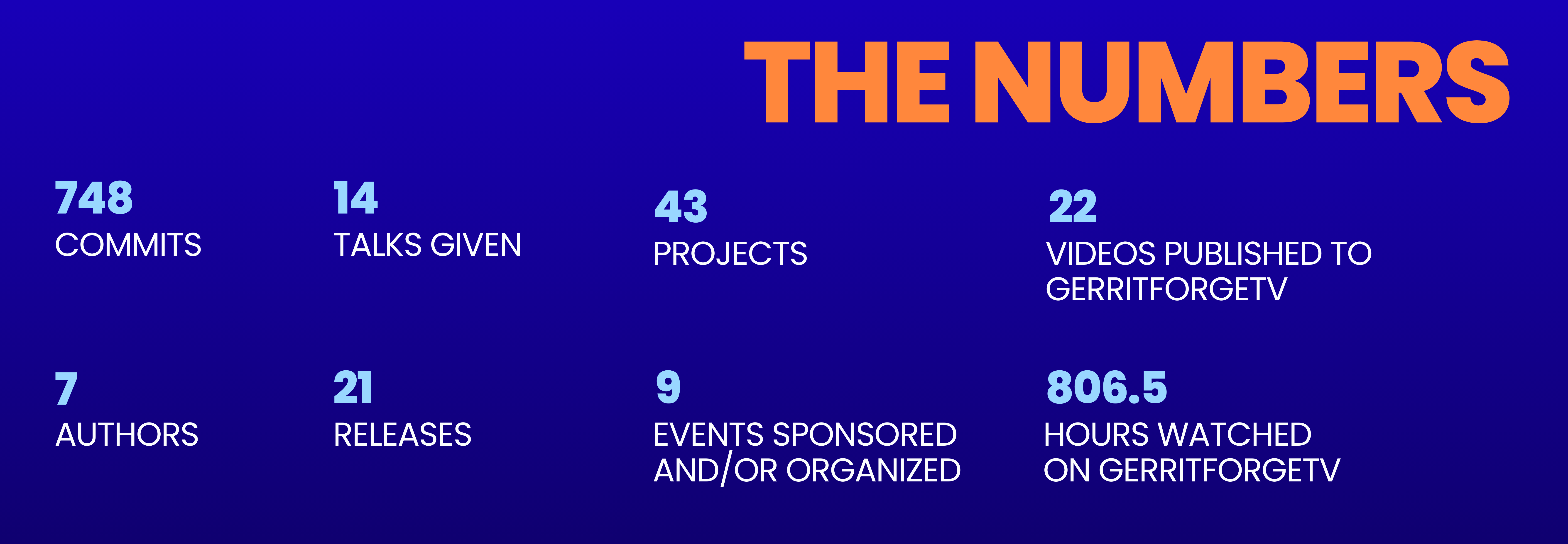
Here at GerritForge, led by maintainer Luca Milanesio, we contributed 28% of the commits to the past 12 months of the Gerrit project contributions!  We also, as usual, performed the crucial work required to take the finished code and turn it into a consumable release for the world, including, but not limited to, managing the whole release process and continuing to host the CI/CD pipelines for the project.

This dedicated effort ensures the smooth, professional delivery of every new version of Gerrit.

Why Traditional Git Servers Won’t Survive 2025

Git changed how we build software.

However, the world it was built for – local repositories and teams, along with simple, human-centric CI/CD pipelines – no longer exists.

Today, codebases are massive. Teams are global. And AI is generating code faster than ever before. Our infrastructure hasn’t kept pace, and traditional Git servers are reaching their limits.

Development Has Outgrown Traditional Git

Software development has exploded in both volume and velocity. According to Archive Market Research, the global software repository market will hit $15 billion in revenue in 2025, growing at 15% annually through 2033. GitHub now hosts over 420 million repositories, supporting more than 100 million developers – each pushing more commits, more frequently, and with more automation than ever.

At the same time, 97% of teams now use AI-assisted tools for vibe-coding, AI-agents for creating PRs and commits, automated AI-code-review, and AI-generated documentation. This results in a massive surge in server traffic, particularly read operations from increased test jobs and automated quality-checking processes, which are literally exploding.

Traditional scaling methods – adding more servers, bigger instances, or wider clusters – simply don’t address the core issue: the world has changed since Git was built 20 years ago.

The Breaking Point for Traditional Git Servers

The symptoms are now familiar to most engineering teams:

  • Slow performance. Git clones and fetches are taking several minutes or even timing out instead of completing swiftly in a few seconds.
  • Pipeline delays. CI/CD is waiting for repositories to be available for cloning or fetching, which delays the feedback cycle.
  • Storage capacity strain. Larger monorepos or multi-repo setups are hitting massive BLOB count and hitting ref limits. When storage is hosted on the Cloud or on shared disks, the increase in the directories and I/O transfer makes Git almost unusable.
  • Rising costs. Over-provisioned infrastructure is trying (and failing) to keep up. The provisional or elastic filesystem limits increase significantly, bringing operational costs to new heights never seen before, and putting more pressure on the budget.

The Archive Market Research report warns: “The rising complexity of software development necessitates efficient and reliable repositories for managing code, dependencies, and artifacts.”

In other words, the systems we depend on to deliver software are now slowing software down.

Scaling Smarter, Not Harder

At GerritForge, we believe that simply throwing more hardware at the problem is no longer enough: it is Git and its utilisation that need to be smarter. We have been researching on the use of AI for optimising the performance and scalability of repositories for over 3 years and shared our findings with the global scientific community.

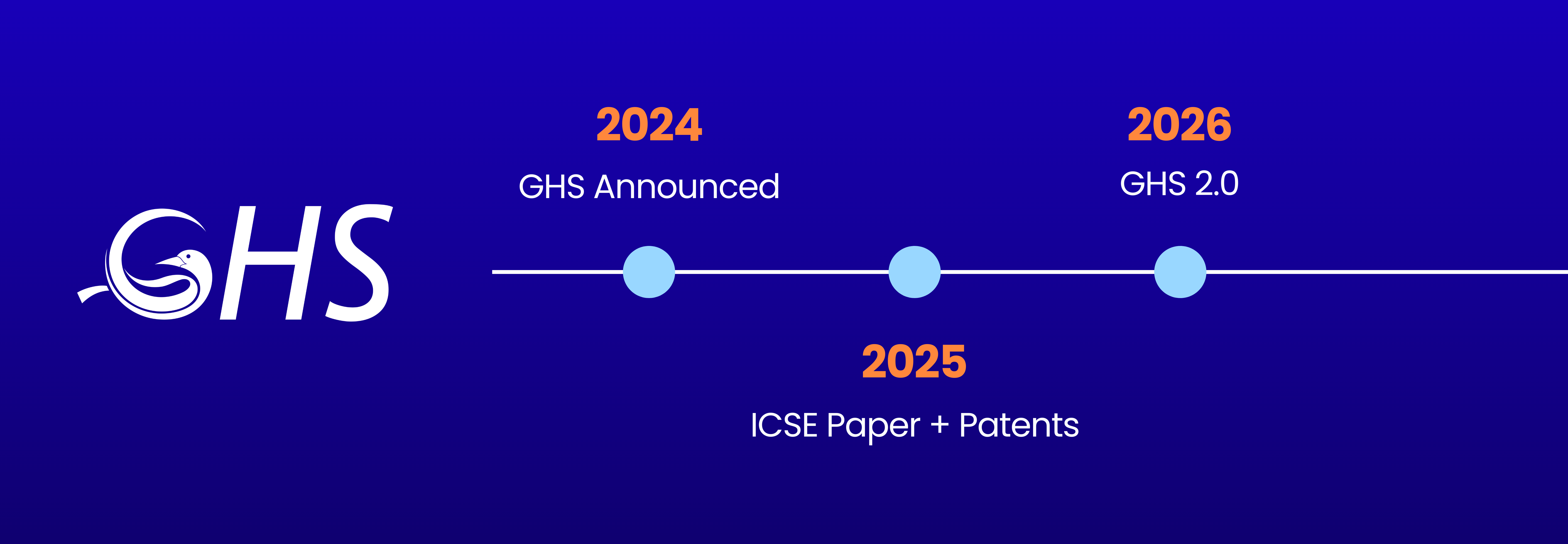
That’s why we built GHS, an AI-powered accelerator for Git-based SCMs.

We have simulated and demonstrated how traditional tools would collapse and developed GHS, a brand-new model to overcome the traditional limitations of the Git repositories.

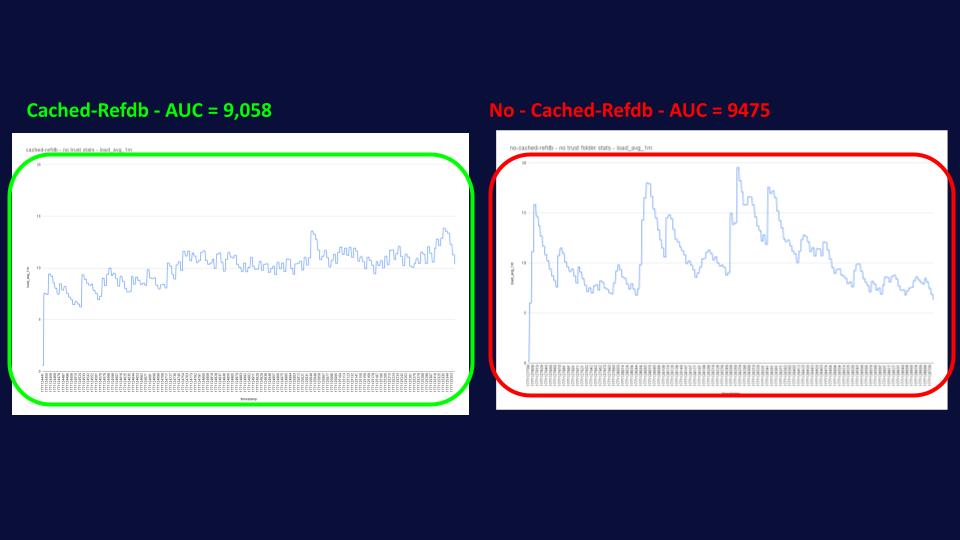
GHS learns how your repositories behave, your access patterns, your CI/CD workflows, and your traffic peaks – and, using reinforcement learning, automatically optimises performance in real-time.

With GHS, the whole development team will experience:

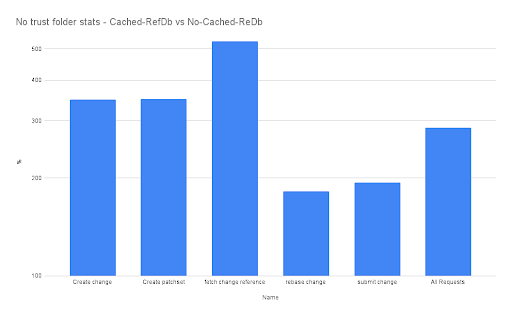
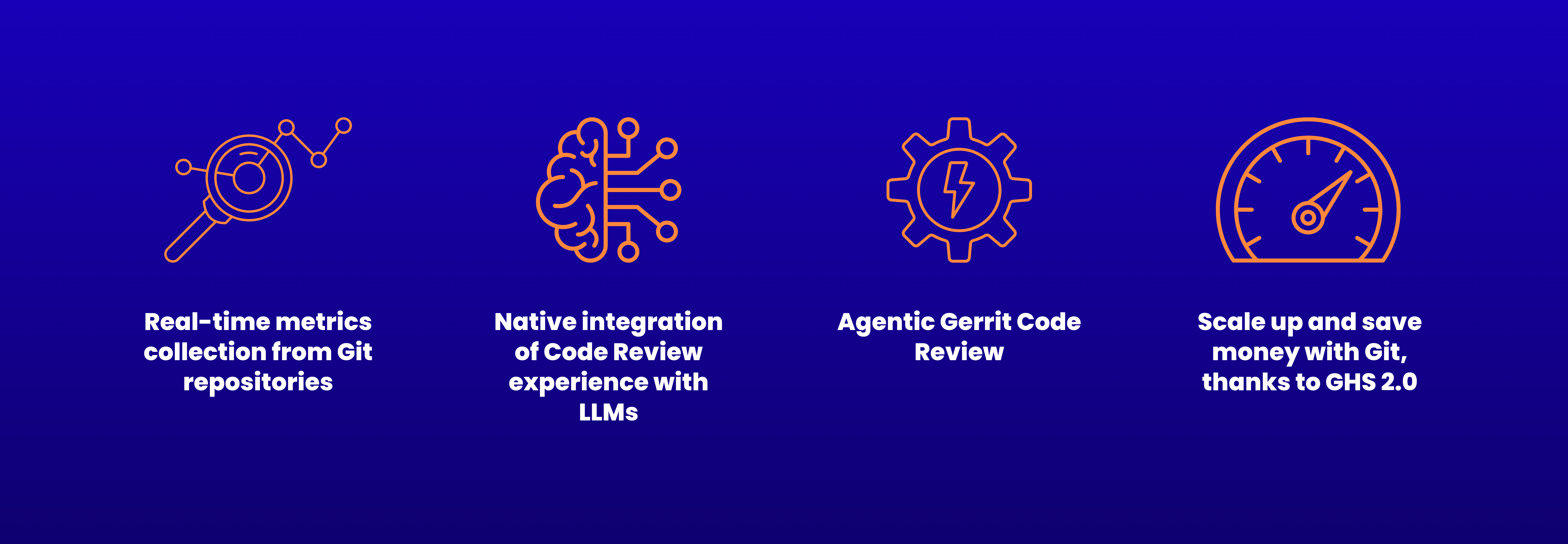
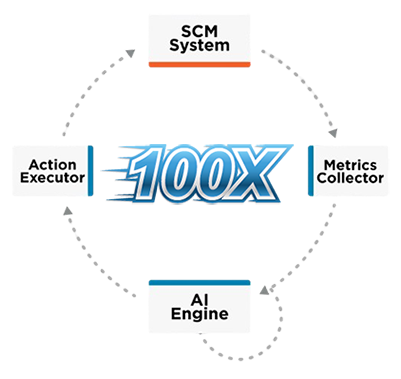
  • Up to 100× faster Git operations. Clones and fetches keep on completing at raw speed, without slowdowns, timeouts or slack.
  • Real-time auto-optimisation. The Git repositories are automatically monitored and optimised for speed, without manual operations.
  • Lower operational costs. The CPU and storage do not suffer from the overload of incoming traffic, delivering better performance on existing hardware. There is no need to scale up the infrastructure and costs massively.
  • Increased reliability. Git servers remain stable even under extreme load, eliminating the need for emergency restarts or maintenance.

Traditional scaling adds more servers. GHS scales using its sophisticated AI model to get the most out of what you already have.

The Gerrit User Summit 2025 made one thing clear: the era of traditional scaling is coming to an end.

As repositories grow and workflows evolve, the next generation of developer infrastructure must be intelligent, simplified & resilient. AI isn’t replacing developers – it’s augmenting them. But if your Git infrastructure can’t keep pace with this new level of activity, your entire SDLC pipeline will suffer.

2025 marks a turning point for software delivery. Traditional Git servers can’t keep up, but that doesn’t mean your team can’t. Because in modern DevOps, speed isn’t just efficiency, it’s a competitive edge.

How Git and Gerrit are Re-Tooling for the Age of AI

A Special Report from the Gerrit User Summit 2025

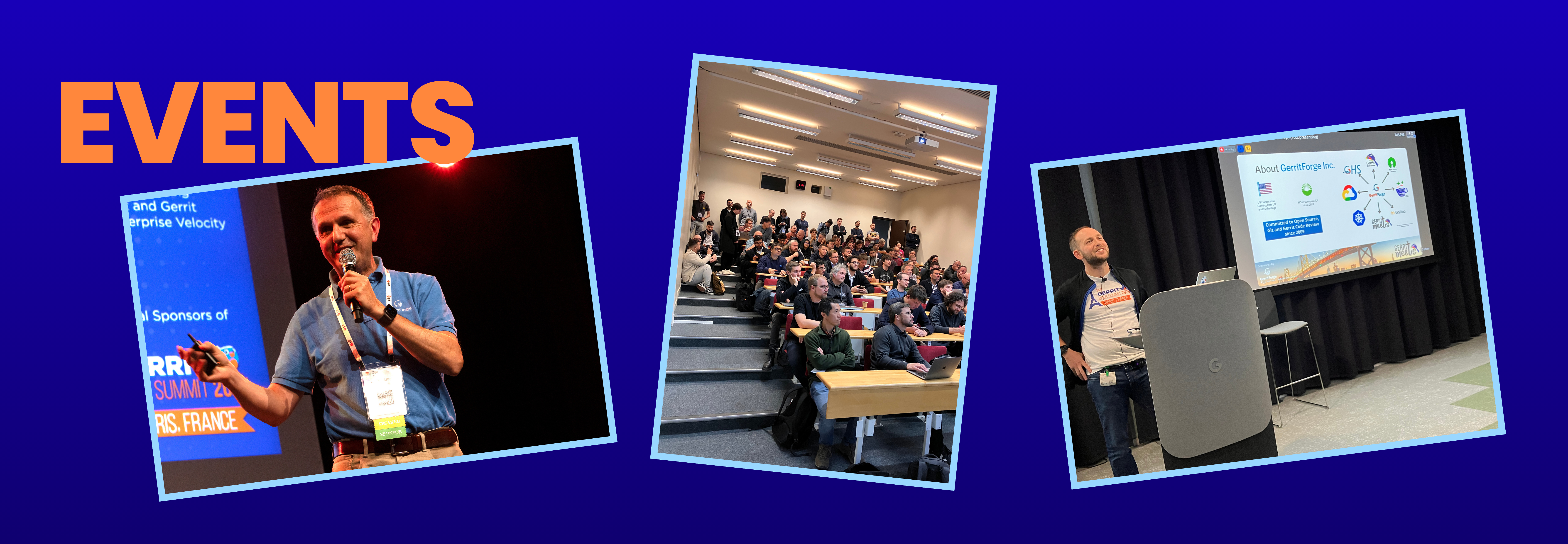
First, a huge thank you to the OpenInfra Foundation for hosting this event in Paris. Their invitation to have the Gerrit User Summit join the rest of the community set the stage for a truly collaborative and impactful gathering.

Paris last weekend wasn’t just a conference; it was a reunion. Fourteen years after the last GitTogether at Google’s Mountain View HQ, the “Git and Gerrit, together again” spirit was electric.

On October 18-19, luminaries from the early days (Scott, Martin, Luca, and many others) reconvened, sharing the floor with the new generation of innovators. The atmosphere was intense, filled with the same collaborative energy of 2011, but focused on a new set of challenges. The core question: how to evolve Git and Gerrit for the next decade of software development, a future dominated by AI, massive scale, and an urgent demand for smarter workflows.

Here are the key dispatches from the summit floor.

A Historic Reunion, A Shared Future

This event was a powerful reminder that the open-source spirit of cross-pollination is alive and well. The discussions were invigorated by the “fresh air” from new-school tools like GitButler and Jujutsu (JJ), which are fundamentally rethinking the developer experience.

In a significant show of industry-wide collaboration, we were delighted to have GitLab actively participating. Patrick’s technical presentation on the status of reftable was a highlight, but his engagement in discussions on collaborative solutions moving forward with the Gerrit community truly set the tone. It’s clear that the challenges ahead are shared by all platforms, and the solutions will be too.

Scaling Git in the Age of AI

The central theme was scale. In this rapidly accelerating AI era, software repositories are growing at an unprecedented rate across all platforms—Gerrit, GitHub, and GitLab alike. This isn’t a linear increase; it’s an explosion, and it’s pushing SCM systems to their breaking point.

The consensus was clear: traditional vertical and horizontal scaling is no longer enough. The community is now in a race to explore new techniques—from the metal up—to improve performance, slash memory usage, and make core Git operations efficient at a scale we’ve never seen before. This summit was a rare chance for maintainers from different ecosystems to align on these shared problems and forge collaborative paths to solutions.

Dispatches from the Front Lines: NVIDIA and Qualcomm

This challenge isn’t theoretical. We heard powerful testimonials from industry giants NVIDIA and Qualcomm, who are on the front lines of the AI revolution.

They shared fascinating and sobering insights into the repository explosion they are actively managing. Their AI workflows—encompassing massive datasets, huge model binaries, and unprecedented CI/CD activity—are generating data on a scale that is stressing even the most robust SCM systems. Their presentations detailed the unique challenges and innovative approaches they are pioneering to tackle this data gravity, providing invaluable real-world context that fueled the summit’s technical deep dives.

Beyond the Pull Request: The Quest for a ‘Commit-First’ World

One of the most passionate debates centered on the developer workflow itself. The wider Git community increasingly recognizes that the traditional, monolithic “pull request” model is ill-suited to the “change-focused” code review that platforms like Gerrit have championed for years.

The benefits of a change-based workflow, cleaner history, better hygiene, and higher-quality atomic changes—are driving a growing interest in standardizing a persistent Change-ID for each commit. This would make structured, atomic reviews a first-class citizen in Git itself. The collaboration at the summit between the Gerrit community, GitButler, JJ, and other Git contributors on defining this standard was a major breakthrough.

This shift is being powered by tools like GitButler and JJ, which are built on a core philosophy: Workflow Over Plumbing. Modifying commits, rebasing, and resolving conflicts remain intimidating hurdles for many developers. The Git command line can be complex and unintuitive. These new tools abstract that complexity away, guiding users through commit management in a way that feels natural. The result is faster iteration, higher confidence, and a far better developer experience.

AI and the Evolving Craft of Code Review

Finally, no technical summit in 2025 would be complete without a deep dive into AI. The arrival of AI-assisted coding is fundamentally shifting the dynamic between author and reviewer.

Engineers at the summit expressed a cautious optimism. On one hand, AI is a powerful tool to accelerate reviews, improve consistency, and bolster safety. On the other, everyone is aware of the trade-offs. Carelessly used, AI-generated code can weaken knowledge sharing, blur IP boundaries, and erode a team’s deep, institutional understanding of its own codebase.

The challenge going forward is not to replace the human in the loop, but to strengthen the craft of collaborative review by integrating AI as a true co-pilot.

A Path to 100x Scale: The GHS Initiative

The most forward-looking discussions at the summit centered on how to achieve the massive scale required. One of the most promising solutions presented was GHS (Git-at-High-Speed). This innovative approach is not just an incremental improvement; it’s a strategic initiative designed to increase SCM throughput by as much as 100x.

The project’s vision is to enable platforms like Gerrit, GitLab, and GitHub Enterprise to handle the explosive repository growth and build traffic generated by modern AI workflows. By re-architecting key components for hyper-scalability, GHS represents a concrete path forward, ensuring that the industry’s most critical SCMs can meet the unprecedented demands of the AI-driven future.

The Road from Paris

The Gerrit User Summit 2025 was more than a look back at the “glorious days.” It was a statement. The Git and Gerrit communities are unified, energized, and actively building the next generation of SCM. The spirit of GItTogether 2011 is back, but this time it’s armed with 14 years of experience and a clear-eyed view of the challenges and opportunities ahead.


Antonio Barone – Gerrit Maintainer, Release Manager
Luca Milanesio – Gerrit Maintainer, Release Manager, Gerrit Engineering Steering Committee
Jacek Centkowski – Gerrit Maintainer

GerritForge 2024 in review: Git, Gerrit Code Review and more

As 2024 draws to a close, it’s a great time to reflect on the milestones and achievements of the GerritForge team in innovating Git performance with the release of GHS, supporting and advancing the Gerrit Code Review project with 20 releases and over 1.5k commits. This year has been one of exciting developments and initiatives that have made Gerrit stronger, more accessible, and better equipped to meet the needs of modern software teams. Here’s what GerritForge accomplished for the Git and Gerrit Code Review ecosystem in 2024.

2024 in numbers

  • 1,500 changes merged
  • 40 repositories involved in the Gerrit and JGit projects
  • 20 releases
  • 5 conferences, 6 meetups
  • 11 contributors, 4 maintainers
  • 20k man/hours spent in open-source projects

Managing the Releases of Gerrit 3.10 and 3.11

As usual, we continue to ensure the regular releases of new Gerrit versions. This year was no exception with the releases of Gerrit 3.10 and 3.11. These releases introduced new features, performance optimisations, and bug fixes to further solidify Gerrit as the leading code review tool for large-scale projects.

Our team cooperated with the Gerrit Code Review community to ensure these releases were stable, well-documented, and aligned with community needs. From coordinating release schedules to ensuring compatibility with plugins and integrations, GerritForge played a key role in making these versions a reality.

Key Highlights

  • Gerrit 3.10 brought major improvements in user experience, including refined UI capabilities and enhanced search functionality.
  • Gerrit 3.11 introduced critical updates to multi-site support, security enhancements, and significant performance boosts.

GerritMeets success in both the USA and Europe

The GerritMeets series has become a cornerstone of community engagement, and 2024 was no exception. GerritForge organised six GerritMeets across several locations, including California, Germany, and the UK, bringing together contributors, users, and maintainers to share knowledge, discuss trends, and explore use cases.
Each session covered a diverse range of topics, including:

  • Best practices for multi-site setups.
  • Advanced plugin development.
  • Gerrit performance tuning for large repositories.
  • Innovations in CI/CD workflows with Gerrit.

These virtual meetups provided a platform for collaboration and learning, reinforcing Gerrit’s community spirit. All the recordings of the 2024 GerritMeets are available as a playlist on the GerritForge TV YouTube channel.

World-class Enterprise Gerrit-as-a-Service on Google Cloud Platform

In 2024, GerritForge expanded Gerrit’s capabilities by adding support for Gerrit-as-a-Service (GaaS) on the Google Cloud Platform (GCP). This initiative makes it easier than ever for organizations to adopt Gerrit without the operational overhead of managing infrastructure.

Benefits of Gerrit-as-a-Service on GCP

  • Scalability: Leveraging GCP’s powerful infrastructure to scale Gerrit deployments for enterprises of any size.
  • Simplicity: Reducing setup and maintenance complexity, allowing teams to focus on development and code reviews.
  • High Availability: Utilizing GCP’s advanced networking and storage capabilities for improved uptime and disaster recovery.

By enabling Gerrit on GCP, GerritForge is broadening the tool’s accessibility, particularly for teams looking for a cloud-native, fully managed solution.

Gerrit User Summit with Qualcomm

This year’s Gerrit User Summit, organized by Qualcomm in collaboration with GerritForge, was a highlight for the community. Held at the Qualcomm HQ in San Diego, CA (USA), the summit offered a chance for Gerrit enthusiasts worldwide to come together in person.
The agenda featured:

  • Keynotes by Gerrit maintainers and industry leaders.
  • Hands-on hackathon for contributors and users.
  • Insightful panels on the future of Gerrit.

The collaboration with Qualcomm not only expanded the summit’s reach but also highlighted Gerrit’s growing importance in enterprise environments.

Showcasing GHS and Gerrit Code Review worldwide

This year, GerritForge actively participated in numerous conferences to showcase GHS and expand Gerrit’s visibility, and demonstrate its unique capabilities. These events were a fantastic opportunity to uncover GHS and showcase Gerrit to hundreds of developers who had never encountered it.

At these conferences, we showcased:

  • GHS: It demonstrates its seamless integration with Git and showcases a whopping 100x performance improvement over a vanilla setup thanks to the power of AI and reinforcement learning.
  • K8s-Gerrit: Highlighting how Gerrit deployed on Kubernetes provides unparalleled flexibility, performance, and multi-site support.

Through live demos, presentations, and Q&A sessions, we highlighted GHS and Gerrit’s ability to scale, its unique review model, and its role in making software delivery pipelines up to 100x times faster.

K8s-Gerrit Hackathon with SAP

Collaboration was at the forefront of the k8s-Gerrit Hackathon, co-hosted by GerritForge and SAP. The hackathon brought together developers from both SAP and GerritForge teams to tackle the challenges of Kubernetes-based Gerrit deployments and multi-site support.

Outcomes of the Hackathon

  • Enhanced scalability for k8s-Gerrit deployments.
  • Breakthroughs in multi-site replication and disaster recovery.
  • Valuable contributions to the Gerrit codebase and documentation.

The event exemplified the power of open collaboration, pushing Gerrit further into cloud-native development.

Looking Ahead to 2025

As we celebrate the progress made in 2024, we remain focused on the road ahead. GerritForge is committed to:

  • Public offering of GHS
  • Gerrit-as-a-Service in Google Cloud
  • Gerrit Code Review v3.12 and v3.13
  • More GerritMeets and Gerrit User Summit events

Our gratitude goes out to the Git and Gerrit Code Review communities, contributors, and partners who have made this year a success. Together, we’re building a tool that empowers teams to deliver high-quality code faster and more efficiently.
Here’s to an even more impactful 2025!

Daniele Sassoli – Gerrit Code Review Community Manager
Luca Milanesio – JGit Committer / Gerrit Code Review Engineering Steering Committee / Release Manager and Maintainer

Hackathon and Gerrit User Summit 2024

I had the pleasure of attending the latest Hackhathon and Gerrit User Summit in San Diego, at the beginning of October and I want to start by extending a thank you to GerritForge Inc. and Qualcomm for organizing it. 

It’s been good to see new faces participating, particularly at the User Summit. The hackathon allowed us to explore different topics, from performance improvements to AI integration.

The main outcomes were the following:

  • JGit performance improvements: Multi-pack index (MIDX for short) is a feature already present in CGit, where it proved to bring a significant performance improvement in object lookup. We managed to implement a PoC in JGit for the MIDX loader and use it in the code. Some basic initial profiling provided a 63% improvement in performance on upload-pack! Not bad for a three-day work! Here is the list of JGit changes. Stay tuned for further development.
  • New AI model implementation: the existing ChatGPT plugin has been renamed and abstracted to accommodate other AI models (i.e. Llama).
  • Message of the day plugin: The Message of the Day plugin is a simple plugin for displaying messages to users, for example, during maintenance operations. Currently, the plugin requires configuration changes to set it up, which can be tedious for Gerrit admins daily. Some changes have been made to allow the plugin to be configured via the UI.

The user summit was rich of talks around version upgrades and Gerrit running in k8s, among other topics. Here is a quick summary of the talks, which will be published on GerritForge TV:

  • Version upgrades: Qualcomm proposed a talk describing their use case while migrating from 2.7 to 3.5 their high-availability installation. On the same note, we, as GerritForge, proposed a different approach to migrations, bringing a new pattern to the community to minimize disruptions, particularly when migrating many versions in one go. We described some use cases of customers we helped migrate on a project basis rather than a “big bang” approach.
  • K8s Gerrit: SAP described the now mature high-availability setup internally used running Gerrit on K8s, using the operator implemented in the k8s Gerrit project. We, as GerritForge, illustrated the changes we did to the same project to allow Gerrit to run in a multi-site fashion, leveraging a share-nothing architecture.
  • The expensive re-check button: research from the University of Waterloo presented by Prof. Shane Mcintosh illustrated the “hidden” costs behind the bad habit of a “simple” re-triggering of test suites because of non-deterministic test behaviors. The case study presented was on the OpenStack project.
  • What’s new in 3.11: Qualcomm presented interesting features and bug fixes for the soon-to-be-released Gerrit version.
  • Git repo maintenance made easy: SCMs are a mission-critical part of any software-related business. GerritForge talked about GHS, an AI-driven approach to maintaining the performance of busy Git repositories that undergo heavy workloads.

These and many other topics were discussed during the conference and unconference section of the user summit. This is it for now, but I am looking forward to the next User Summit to meet with the community and come up with new interesting discussions.